If I pulled a muscle in my back and could only pick BPC or TB-500, I'd probably lean toward TB-500.
We all talk about BPC-157, and rightfully so.
But TB-500 always takes a backseat, yet it does a lot of things BPC doesn't.
Here's everything you need to know.
TB-500 vs. Thymosin Beta-4
This trips up a lot of people, so let's clear it up first.
Thymosin Beta-4 is what your body actually makes. It's a full-length protein, 43 amino acids long, found in nearly every cell you have.
TB-500 is different. It's a synthetic fragment built around the active region of that protein, only seven amino acids long. When you buy from a research peptide company, this fragment is usually what you're getting.
Here's where it gets messy. A lot of suppliers will sell you TB-500 but label it as TB4, or the other way around.
Most of the time, you'll be fine either way. But you should know there's a difference, because it can change how things play out in practice.
How TB-500 Works: The Foreman
Every cell has internal scaffolding called the cytoskeleton. The main building block of that scaffolding is actin.
G-actin is the free version, basically loose bricks sitting around. Your body has plenty of it everywhere.
The problem is that the bricks have no direction. They're just lying there. No coordination, no plan.
That's where TB-500 comes in. It binds to G-actin and releases it to the right workers at the right time and in the right place.
It's the manager who says move these bricks to the injury and rebuild it.
So the walls go up faster, straighter, and in the exact direction the injury needs.
Your body already knows how to heal. This just makes it dramatically more efficient.
"TB-500 orchestrates where your body sends its repair crew."
TB-500 Benefits
TB-500 is so much more than just a joint and tendon peptide.
- Angiogenesis. It helps build new blood vessels into healing tissue. More blood flow, faster repair.
- Directly anti-inflammatory. It suppresses NF-κB activation and reduces oxidative stress. This is one spot where it actually beats BPC, which works on inflammation more indirectly.
- Anti-fibrotic. It reduces scar formation. For anyone dealing with heart issues or recovering after a heart attack, this is one of the first things I'd reach for.
I've seen TB-500 do real work for folks with long COVID, chronic fatigue, Lyme, fibromyalgia, and lung issues.
The lung health benefit alone is something I don't think gets talked about enough.
TB-500 and the Brain: The Alzheimer's Study
A study in International Immunopharmacology tested two fragments of thymosin beta-4: TB-500 and Ac-SDKP.
They tested both fragments in lab-grown brain cells and in living mice with Alzheimer's-like disease.
In the neurons exposed to amyloid-beta, both peptides protected cell viability and rescued neurite atrophy.
In the 5xFAD mice, the treated mice performed significantly better on both memory tests.
Interestingly, the peptides did NOT reduce the overall amyloid plaque burden in the hippocampus.
The plaques were still there. But the mice still got better.
This is the first study I've seen that directly tests TB-500, the actual synthetic fragment, in a rigorous Alzheimer's model. Not just the full-length thymosin beta-4.
This is early-stage research, but it's well-designed. It won't change clinical practice tomorrow, but it should change the conversation about where peptide research is headed.
TB-500 Dosage
These are my opinions, not clinical guidance.
| Goal | My dose |
|---|---|
| General recovery and longevity | 500 mcg to 1 mg daily |
| Stacking 1:1 with BPC-157 | 500 mcg to 1 mg daily |
| Active injury | 2 to 2.5 mg twice per week |
| Something severe | Start at 5 mg twice per week, then taper down |
For an active injury, I go higher and less often.
One thing I'll say. If you've got a real injury, run it until you're 95 to 100 percent healed. Don't quit at 8 weeks just because a calendar says so.
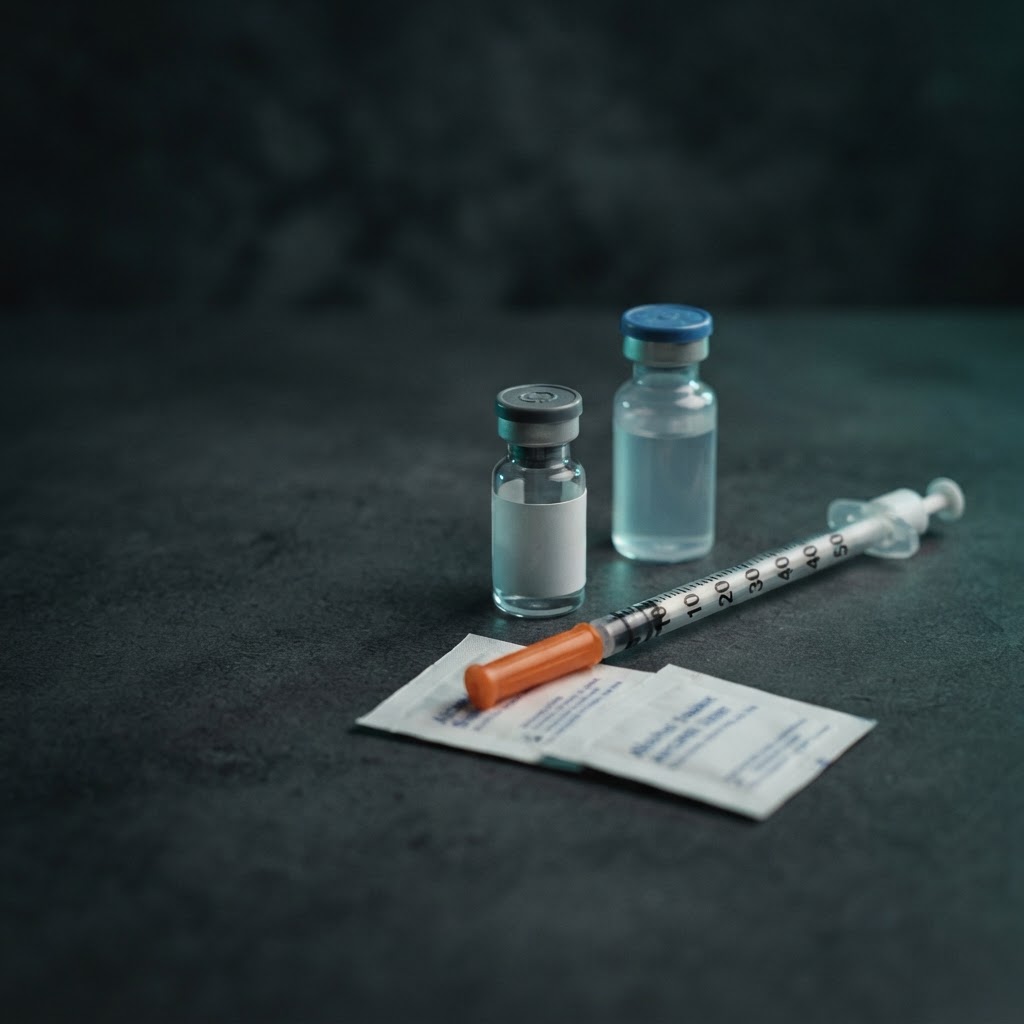
It's administered via subcutaneous injections. If you need help mixing it, here's how to reconstitute peptides.
TB-500 Side Effects
Potential temporary side effects include headaches, nausea, and light-headedness.
The long-term effects are still under investigation.
TB-500 vs. BPC-157
BPC-157 is the worker doing the building right at the injury. TB-500 is the foreman, and it works systemically.
Together, they're the Wolverine stack. One plus one equals three.
If I pulled a muscle in my back and could only pick BPC or TB-500, I'd probably lean toward TB-500.
The direct anti-inflammatory benefit is just too good to pass up. Obviously, I'd rather use both.
For gut health, I'd go BPC every time. For pure muscle recovery, BPC again.
But for injury, lung issues, and those weird chronic illnesses nobody has clean answers for, TB-500 is the one I keep coming back to.
My full stack is here: the BPC-157 and TB-500 tissue repair protocol.
Other TB-500 Stacks
- GHK-Cu for skin regeneration.
- KPV on top of BPC and TB-500 when an injury stalls out.
- Growth hormone-releasing peptides for overall health improvement.
Is TB-500 Legal?
📋 Legal status (updated November 2026) TB-500 is not FDA approved and is not on the 503A Bulks List. FDA placed it in Category 2 in September 2023, noting it had no human exposure data for the fragment, and removed it in April 2026 after the nomination was withdrawn. On July 23, 2026, the FDA's Pharmacy Compounding Advisory Committee voted 8 to 6, with 1 abstention, to recommend it for wound healing. The October 30, 2026 HHS draft policy covers TB-500 acetate as an injection only. It is not final. WADA prohibits thymosin beta-4 and its derivatives, including TB-500, at all times.
TB-500: Final Thoughts
TB-500 is the one I keep coming back to for injuries.
Just remember it's a tool, not a miracle cure. It won't fix degenerative disc disease overnight.
Set your expectations in reality and give it time to work.