By itself, it's not a miracle peptide. It won't fix everything overnight. But it's genuinely underrated for everything beyond skin.
GHK is one of my favorite peptides and easily one of the most versatile.
Most people write it off as a beauty peptide and stop there. Here's how much more it actually does.
What Is GHK-Cu?
GHK is small and light for a peptide, around 340 daltons, which is why it works so well transdermally.
The Cu stands for copper. GHK grabs onto copper and becomes the active molecule, GHK-Cu.
Think of GHK as a shuttle. It carries copper exactly where your body needs it.
Loose copper floating around your body is toxic. GHK delivers it safely and doesn't leave the free copper behind.
GHK is endogenous. Your body already makes it. Your levels just drop about 80% between age 20 and 60.
The decline tracks with worse skin, slower wound healing, and lower quality tissue over time.
How GHK-Cu Works
I like to think of GHK as a building maintenance crew doing two jobs at once.
Job One: It Delivers the Raw Materials
Copper switches on three key enzymes.
- Lysyl oxidase cross-links collagen and elastin, which gives skin its firmness and spring.
- Superoxide dismutase, or SOD, is one of your main internal antioxidants.
- Cytochrome c oxidase helps your cells make energy, otherwise known as ATP.
Job Two: It Sends the Instructions
GHK shifts the activity of roughly 4,000 human genes toward a younger, healthier cell.
Repair genes and antioxidant genes go up. Inflammation and tissue-destruction genes go down.
It modulates around 31% of human genes by 50% or more. Almost a third of your genome is nudged in a better direction.
"People call it the ShamWow peptide because it does so many different things while most peptides just stay in their lane."
GHK-Cu Benefits
Most people know GHK for skin. It has the longest cosmetic track record of any peptide out there.
But it does a lot more than that.
It quiets inflammation. It stimulates fibroblasts, the cells that build collagen. It coordinates tissue remodeling and recruits repair cells to the area.
This makes it different from BPC-157 and TB-500, which are your soft tissue injury workhorses. They work through local signaling and getting cells to migrate to the injury.
GHK's real benefit is matrix remodeling and gene modulation, which is exactly why it pairs so well with those two instead of replacing them.
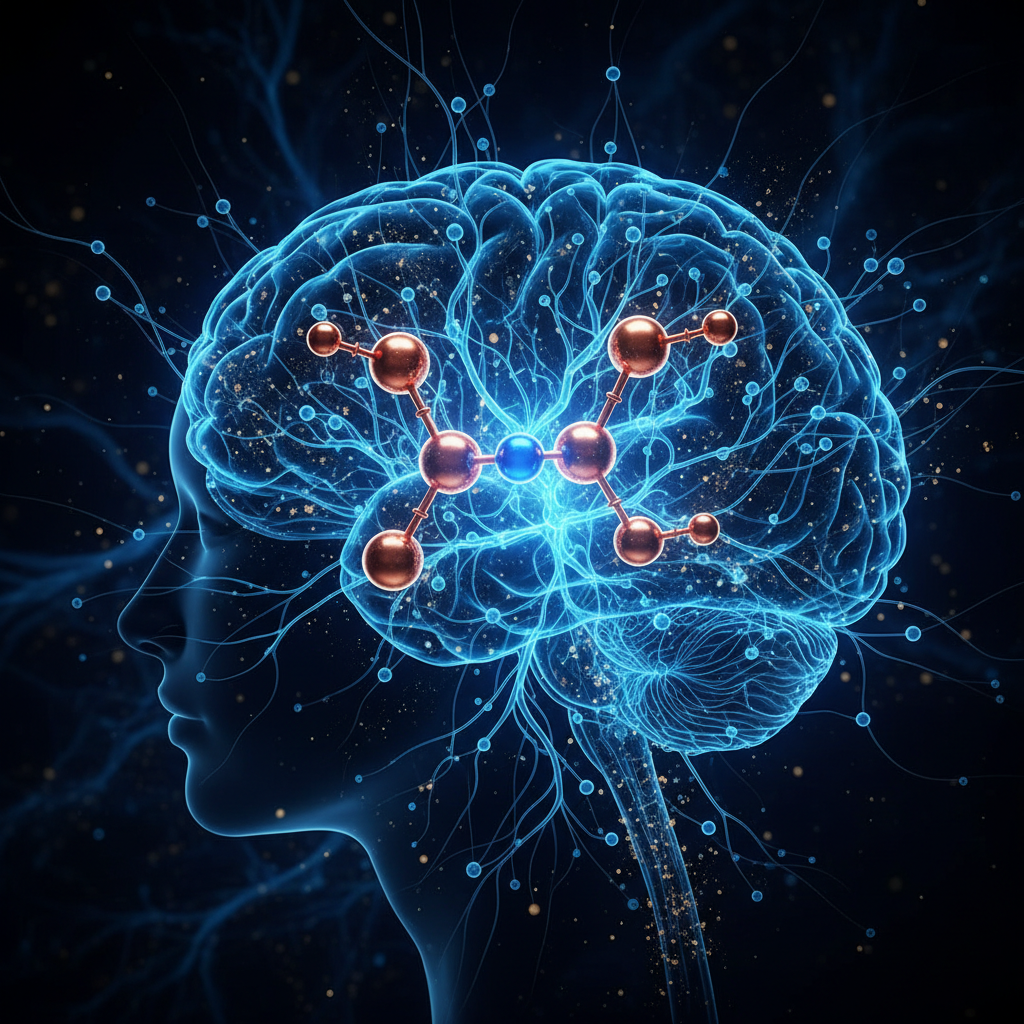
Documented effects show up in skin, hair, wounds, bone, nerve, lung, and brain.
Who GHK-Cu Is For
- Anyone with aging skin, usually 30s and up
- Recovery-focused athletes who want tissue to rebuild faster
- Post-surgical and wound recovery
- Early-stage hair loss, and I mean early stage
- Longevity-minded people interested in the gene data
- People recovering from lung issues
GHK-Cu Dosage
These are my opinions, not clinical guidance.
I like to break GHK dosing into three tiers.
| Tier | Dose | Best for |
|---|---|---|
| Tier 1: General optimization | 1 to 2% serum once or twice daily, or 1 mg injectable a few days a week | Maintenance and prevention |
| Tier 2: Active performance | 1 to 2 mg injectable per day for 4 to 8 weeks, plus topical or microneedling | Athletes, hair, post-surgical recovery |
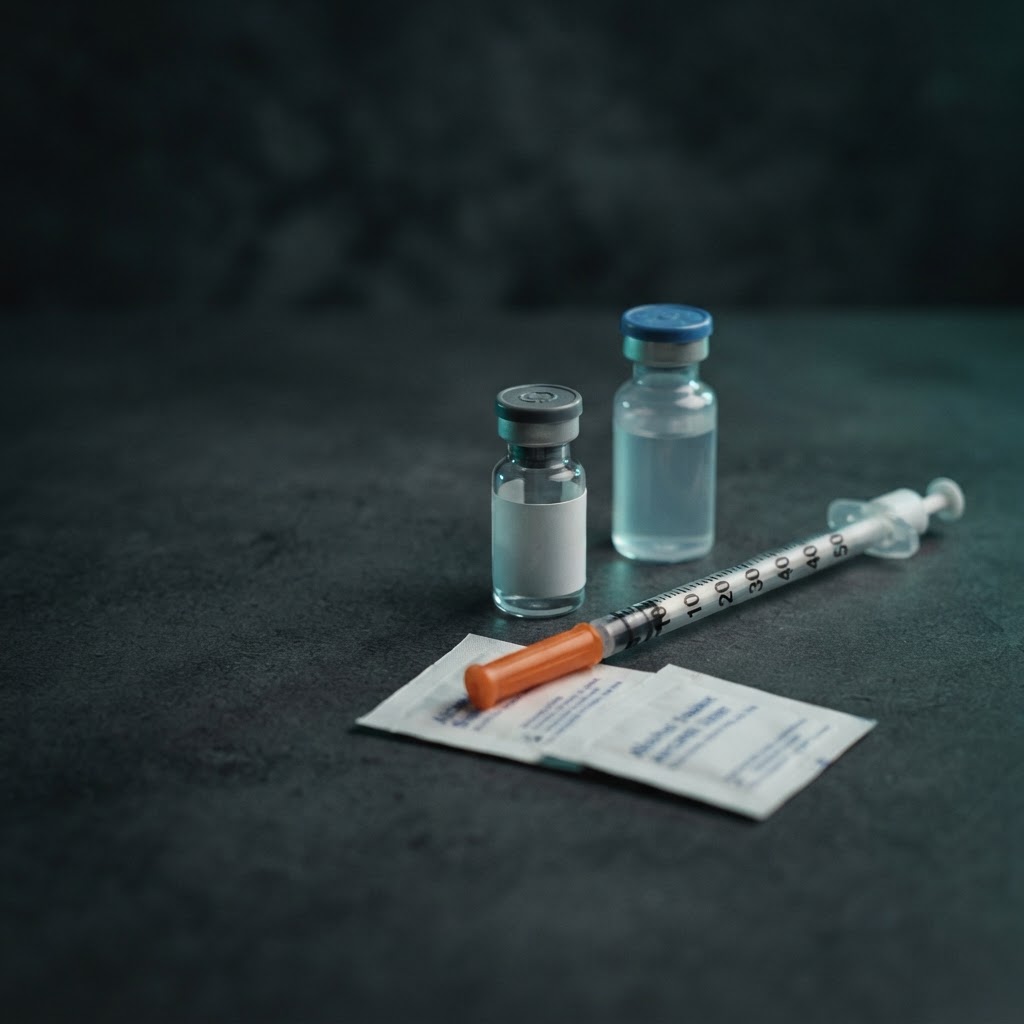
| Tier 3: Significant dysfunction | 2 to 5 mg per day | Chronic wounds, diabetic ulcers, serious post-surgical recovery, lung issues |
For me, 1 to 2mg is the sweet spot. I don't notice anything at 4 or 5mg that I don't already get at 2mg.
Beyond 5 mg daily, you're just wasting money in my opinion.
GHK-Cu by Goal
- Longevity and anti-aging: 1 to 2mg per day.
- Athletic recovery: 1 to 2mg per day stacked with BPC and TB-500.
- Post-surgical: 1 to 2mg per day subQ, plus a 1 to 2% topical on the wound once it's closed, twice daily to help with scarring.
- Skin aging: 1 to 2mg per day subQ plus the 1 to 2% topical twice daily.
- Hair regrowth: topical plus microneedling. A 1 to 2% solution at 0.5 to 1mm depth, weekly to biweekly.
- Cognitive: go intranasal at 1 to 2mg.
GHK-Cu Cycling
The standard rhythm is 8 weeks on, 8 weeks off for injectable.
You can also run 4 to 6 weeks on with 2 to 4 off, or 30 days on with 14 off.
Topicals are different. You can basically run those continuously.
I'm not as strict about cycling GHK as I am with something like BPC. But I wouldn't inject it every single day for the rest of my life either.
How Long Does GHK-Cu Take to Work?
- Weeks 4 to 8: hydration and texture changes from topical, and gradual recovery improvements from injectable.
- Weeks 8 to 12: fine lines start showing up better in photos and healing speeds up.
- Months 3 to 6: skin firmness, visible hair changes, and the deep structural remodeling that takes the longest.
Intranasal GHK-Cu and the Brain
Researchers at the University of Washington took 100 aged mice and gave them GHK-Cu by injection or intranasally.
Both delivery methods improved learning. But the quality of the improvement was very different.
The intranasal group showed sustained improvement. Both males and females got faster at finding the escape.
Intranasal GHK-Cu also suppressed mTOR signaling, MYC target genes, and oxidative phosphorylation. Those are the exact same pathways that are suppressed by rapamycin and caloric restriction.
The route of administration actually changed what GHK-Cu did.
This is a preprint, and it's a mouse study. I break down the full study and its limitations in GHK-Cu Beyond Beauty.
Do GLOW and KLOW Blends Work?
GLOW is GHK-Cu + BPC-157 + TB-500. KLOW is that same blend plus KPV.
Are they "dead on arrival" the moment you mix them?
Short answer. Yes, these blends are stable, and yes, they work.
The big claim is that the copper falls off GHK when it's mixed with other peptides. But copper falls off under specific conditions:
- Strong chelators that steal copper, like EDTA and citrate, or high-dose vitamin C
- Thiols like glutathione
- Extreme pH
That's why I tell people, do not mix vitamin C or glutathione into the same vial as GHK-Cu.
Do BPC-157, TB-500, or KPV act like EDTA or glutathione? No.
Is GHK-Cu Legal?
📋 Legal status (updated November 2026) GHK-Cu is not an FDA-approved drug. For 503A compounding, FDA lists GHK-Cu in Category 1 for every route except injection. Injectable GHK-Cu was placed in Category 2 in September 2023, and that nomination was withdrawn in 2026. FDA says it intends to consult its Pharmacy Compounding Advisory Committee about GHK-Cu before the end of February 2027.
GHK-Cu: Final Thoughts
Here's where I land on GHK.
By itself, it's not a miracle peptide. It won't fix everything overnight.
But it's genuinely underrated for everything beyond skin.
It really shines when you pair it with other peptides. That's where you get the most bang for your buck.
I'm a fan. It's a regular in my rotation. I use the topicals more than the injectable, but I still reach for the shots when I need them.