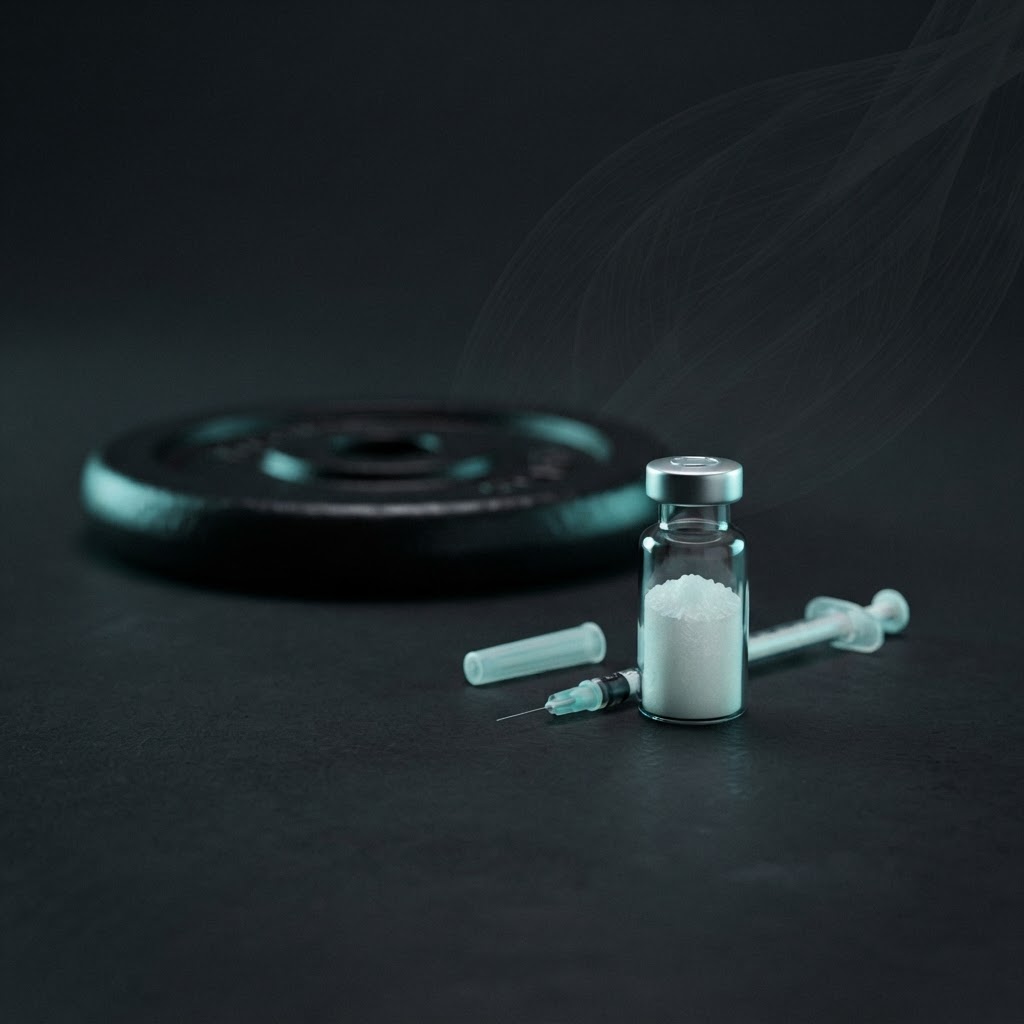
Personally, I believe microdosing is the most intelligent entry point for almost everyone. It is the smoothest way to learn how your body responds and to avoid the discomfort that can come from hitting the gas too hard and too soon.
I get some version of this question almost every week:
"Hunter, I see a ton of influencers now saying it's better to take retatrutide once per week instead of microdosing. Am I messing up by not doing one big shot once per week?"
In clinical trials, research has only examined once-per-week dosing of tirzepatide and retatrutide, so I understand the confusion.
Let's go through exactly what microdosing means, what it actually does, and when you should or shouldn't do it.
What Does Microdosing a GLP-1 Mean?
People use the word two different ways.
1. Split Dosing
Splitting up your total weekly dose into smaller and more frequent injections.
If your protocol calls for 8mg per week (which is a very high dose), you could inject 1mg every day or 2mg every other day.
The total weekly amount stays almost the same, but the way it is delivered to your body becomes smoother.
2. True Low Dosing
When Dr. Tyna Moore originally said "microdosing," she meant a fifth to a tenth of the standard starting dose. Not just the starting dose split up.
She thinks about low-dose GLP-1s the same way she thinks about low-dose naltrexone (LDN).
Plenty of people in my world are getting genuinely impressive results at 1 to 2mg of retatrutide per week and never escalating past that.
Why GLP-1s Are Dosed Once a Week
Retatrutide was designed with a long half-life of about six days. Semaglutide sits around 7 days. Tirzepatide around 5.
That's why pharmaceutical companies tested them as once-weekly drugs. The goal was to make it as easy as possible for people to stay compliant, because most people hate injecting.
The weekly schedule maximizes human compliance, not necessarily biological perfection.
What Split Dosing Actually Does
When you take the full weekly dose in one shot, the level in your blood rises quickly in the first 24 hours, stays high for a few days, and then slowly falls until the next injection.
When you split it, you get multiple small peaks that overlap. A flatter line.
Here's the honest part. Because these drugs have such long half-lives, the drug is already in your system at a fairly steady level all week long. Splitting lowers the peak slightly and raises the low point slightly.
Total drug exposure barely changes. Your receptors see roughly the same amount of drug either way.
"Split dosing won't save your receptors, and it definitely won't wreck them. If you split, do it to mitigate side effects and keep your response curve smoother."
You'll feel the effects faster with once weekly. You'll get a smoother ride with daily or every-other-day injections.
The Benefits of Microdosing
- Less nausea and GI distress. Almost everyone on a GLP-1 knows that first 48-hour wave of nausea after an injection. Smaller injections keep the rise slower.
- Steadier appetite control. On a full weekly dose, people often feel no hunger for the first three days and then become ravenous toward the end of the week.
- More stable energy and mood. Large peaks can make some people feel wired or anxious for a day or two, then lethargic when the level drops.
- Slow titration. You can move up gradually and find your personal sweet spot without overwhelming your system.
How to Microdose Retatrutide
These are my opinions, not clinical guidance.
| Weekly dose | Split protocol | Note |
|---|---|---|
| 2mg | 0.5mg every other day (Mon, Wed, Fri, Sun) | A common starting point |
| 4mg | ~1.3mg, 3x per week | Do NOT start this high |
| 6mg | 2mg, 3x per week | Only after prolonged use, 18 to 24+ weeks |
Start low and go slow. Build tolerance first, then adjust your total weekly dose as needed.
Some people who simply want longevity benefits may get great results at 2mg per week, while someone with deeper metabolic dysfunction might need 8mg or more.
Personally, I split my GLP-1 dose into two or three injections a week.
The same split logic works for tirzepatide and cagrilintide.
When Once-Weekly Dosing Works Fine
There are still plenty of cases where once-weekly dosing is ideal.
- You tolerate it well and have little to no side effects.
- You travel frequently or don't want to manage multiple doses.
- You have stable blood sugar and a healthy metabolism.
When Microdosing Makes the Most Sense
- You're just starting out. Your body needs time to adjust to the delayed gastric emptying and glucose signaling.
- You get side effects after your weekly shot. Nausea, reflux, headaches, fatigue, or hot flashes are your body telling you the peak is too high.
- You live an active life or have a variable schedule. A more consistent internal rhythm supports training, sleep, and focus.
Does Split Dosing Burn Out Your GLP-1 Receptors?
There is no good human evidence that split dosing or long-term use destroys, burns out, or permanently downregulates your GLP-1 receptors.
Your GLP-1 receptor is a G protein-coupled receptor. Think of it like a lock on the surface of a cell. When a drug binds to it, the cell eventually pulls some of those locks inside to cool things down. That's desensitization. Every receptor in your body does some version of this.
In a petri dish, you can absolutely make it happen. But a dish is not a body.
In the best animal study we have, researchers desensitized the receptor in cells, then gave the same drug to mice long-term. The mice showed no loss of blood sugar control and no drop in receptor levels. The receptor recycles, and your body keeps building new ones.
We even have a real-world test. Old exenatide came in a twice-daily version and a once-weekly version. The more constant version worked as well or better, with less nausea. If frequent exposure burned out receptors, the result would be the opposite.
What We Don't Know
No human study has ever measured GLP-1 receptor density before and after long-term use. Nobody has counted the locks.
No study has cleanly tested split dosing against weekly dosing for receptor health either.
So when someone tells you, with total confidence, that split dosing fries receptors, ask for the human data. There isn't any.
Why GLP-1s Stop Working: It's Not Your Receptors
The long-term trials say your receptors don't give up.
- In STEP 5, people on semaglutide achieved about 15% weight loss and maintained it for two full years.
- In the three-year tirzepatide data, people kept over 20% weight loss, and progression to diabetes dropped by more than 90%.
So why does weight loss stall? Energy balance.
A smaller, starved body burns fewer calories. The peptide is still working, but your intake and burn have found a new balance point.
The scale stops moving because the math changed, not because the drug quit.
When you hit a plateau, look at your training, protein, hormones, lifestyle, and dose. Hormones matter here. In one study, women on HRT lost about 35% more weight on tirzepatide.
Should You Cycle Off Your GLP-1?
I'm still a fan of taking periodic breaks. Especially if you've climbed too high on your dose.
Not because I think your receptors are fried.
Here's the pattern I see. People keep chasing the dose up. The food noise creeps back, so they bump it. Then they bump it again. Before long, they're on a high dose with more side effects than they need.
A break gets you off that hamster wheel. When you come back in at a lower dose, a lot of people find it does the job just fine.
My own cycle is a low dose, a short bump, a taper, and a month off.
"At the end of the day, I think most people don't need as high of a dose as they think they do if everything else is being addressed in their life."
If appetite comes back hard during your break, cagrilintide works through a separate pathway and may help hold the line.
GLP-1 Microdosing: Final Thoughts
Whether you microdose or inject once per week, it's simply a tool.
The art lies in how you use it and how well you listen to your body.
I believe microdosing is the most intelligent entry point for almost everyone. Start low, go slow, and build up intelligently.
Ultimately, the best approach is the one that keeps you consistent, compliant, and progressing.